Interaction design · UI · Prototyping
StuReBot
A remote participant should be able to look around without asking someone in the room to move a camera.
- When
- Winter term 2022–23 → Summer term 2023
- Project stage
- Interface and technical prototypes
- Context
- Prototyping / Redesign · Internet der Dinge · HfG Schwäbisch Gmünd · Two successive project stages
The starting point: Chappie
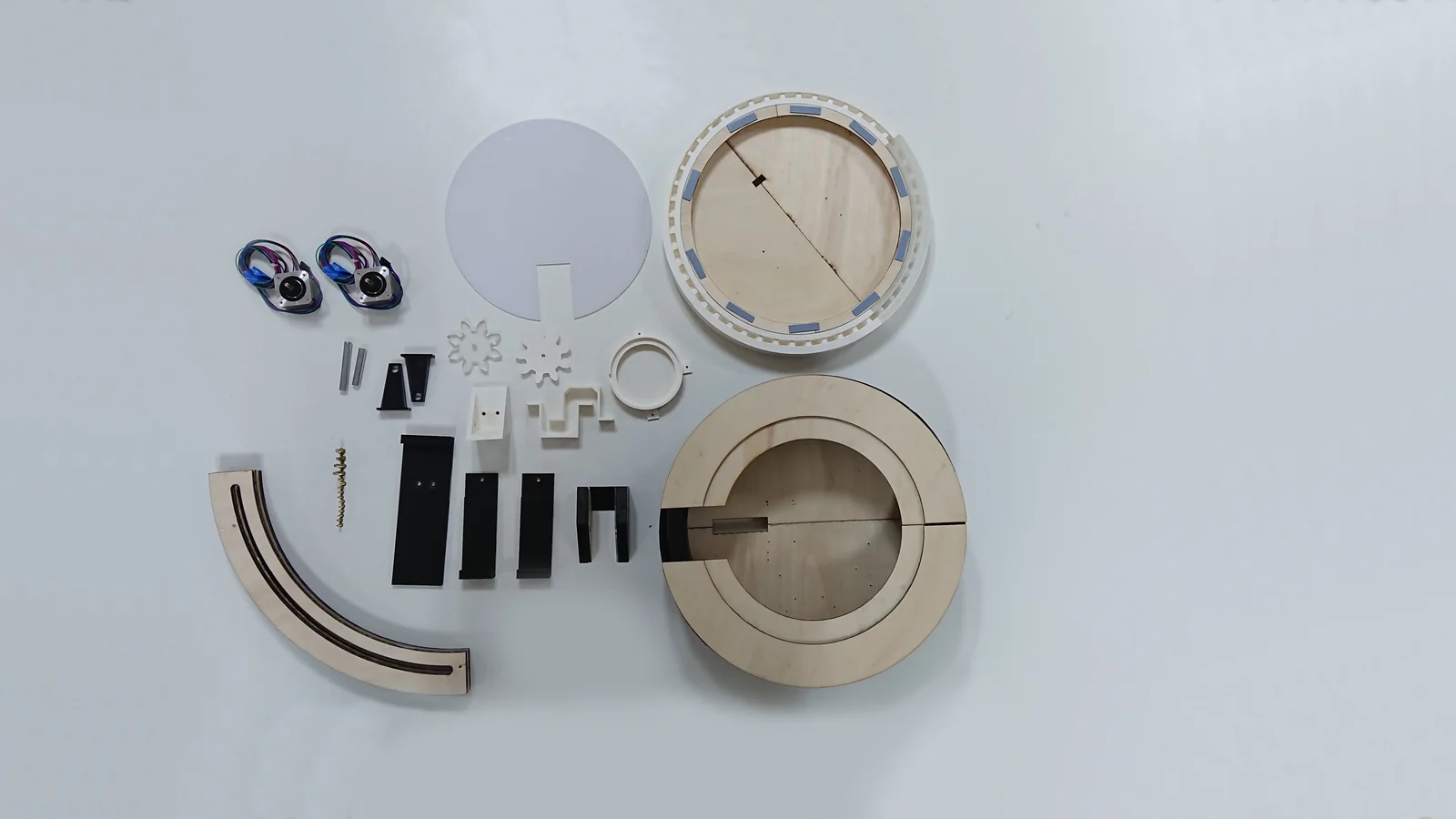
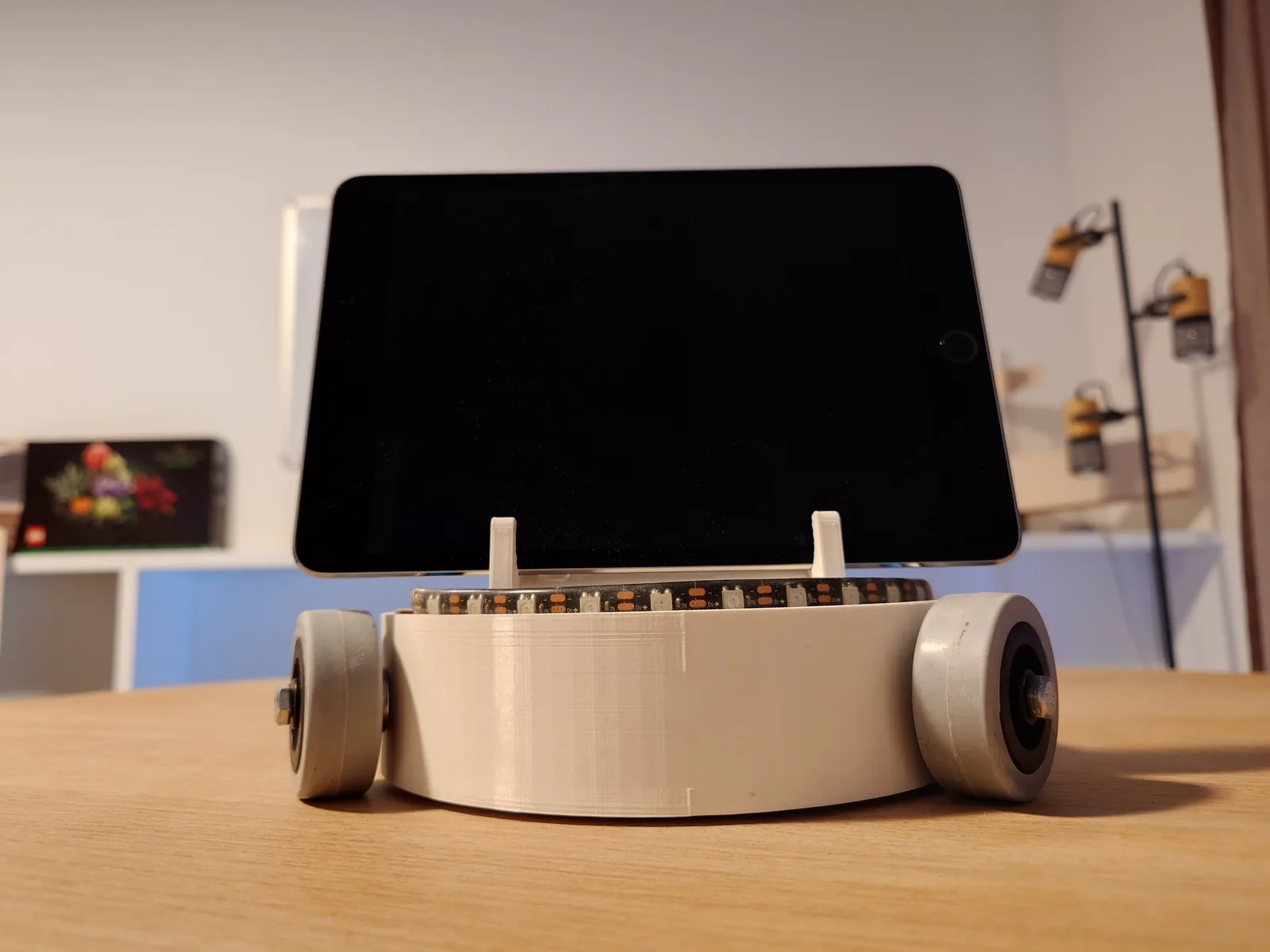
The project began with Chappie, a team exploration of presence in hybrid classes. A tablet on a rotating and tilting base would let remote participants change their view, while LEDs signalled their presence. The first prototype connected the website to the controller and operated the LEDs; the mechanics and wider meeting integration needed further work. In the following term, Jakob continued the idea independently as StuReBot.
Fit into an existing meeting
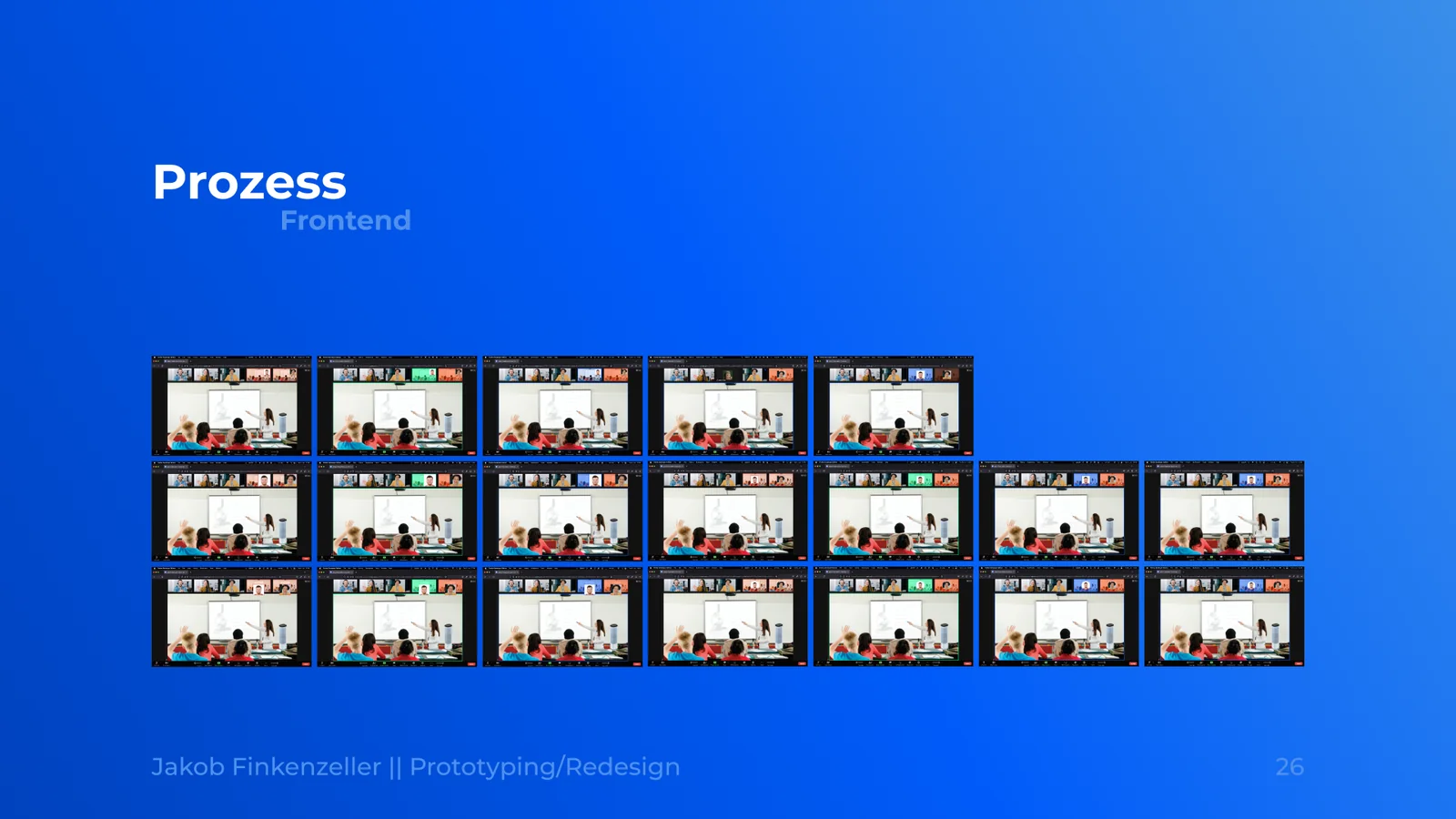
The solo continuation replaced Chappie’s separate web-application approach with a Chrome extension designed to sit within Zoom. Feedback from supervisors favoured taking as little space as possible from the meeting view. The interface was simplified by removing a separate bot sidebar and information that participants could not act on, while exploring available-bot indicators within the meeting.
Put the action beside its effect
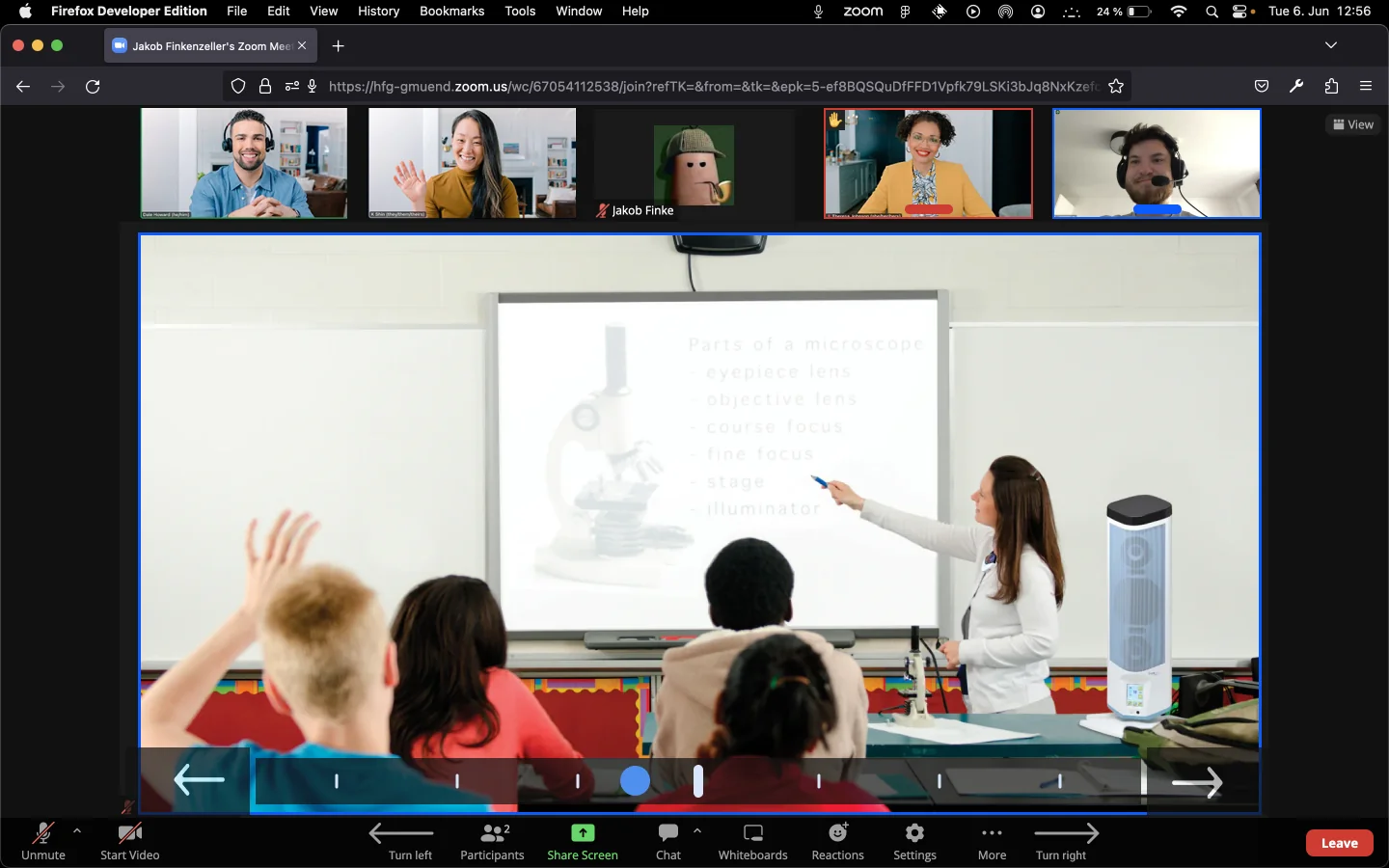
Feedback on the wireframes led to placing directional arrows directly on the robot’s video, instead of among Zoom’s call controls. An orientation marker addresses the possibility of losing track after rotating. The resulting screen flow covers selecting an available bot and taking control, while LED signals on the physical device communicate when a participant joins or leaves. Digital controls and physical feedback describe the same change in presence.
Follow the command through the system
The physical exploration uses an ESP32 and a motor to rotate an iPad stand. Several communication approaches were tried before moving to a server that relayed commands between the extension and controller. Debugging exposed a data-type mismatch that stopped commands being processed correctly. The work connects interface intent to physical response, while documenting the integration bugs and hardware refinements still remaining at the end of the project.
What I take from it
Across the two stages, the concept became more focused: less interface around the call, a more direct movement control and a clearer connection to the physical device. Building that connection also made debugging, message formats and the limits of a browser extension part of the design process.
The people behind it
Chappie · Original concept and prototype · Winter term 2022–23
Jannis Schuler · Jakob Finkenzeller · Simon Feldmann
StuReBot · Solo continuation · Summer term 2023
Jakob Finkenzeller
Supervisors
Michael Schuster · Benjamin Thomsen