Tangible interaction · Connected devices · Prototyping
Sandtable
What happens when a familiar drawing interaction moves beyond its original surface?
- When
- Summer term 2022
- Project stage
- Working student prototype
- Context
- Technical Foundations 2 · Internet der Dinge · HfG Schwäbisch Gmünd
Start with two dials
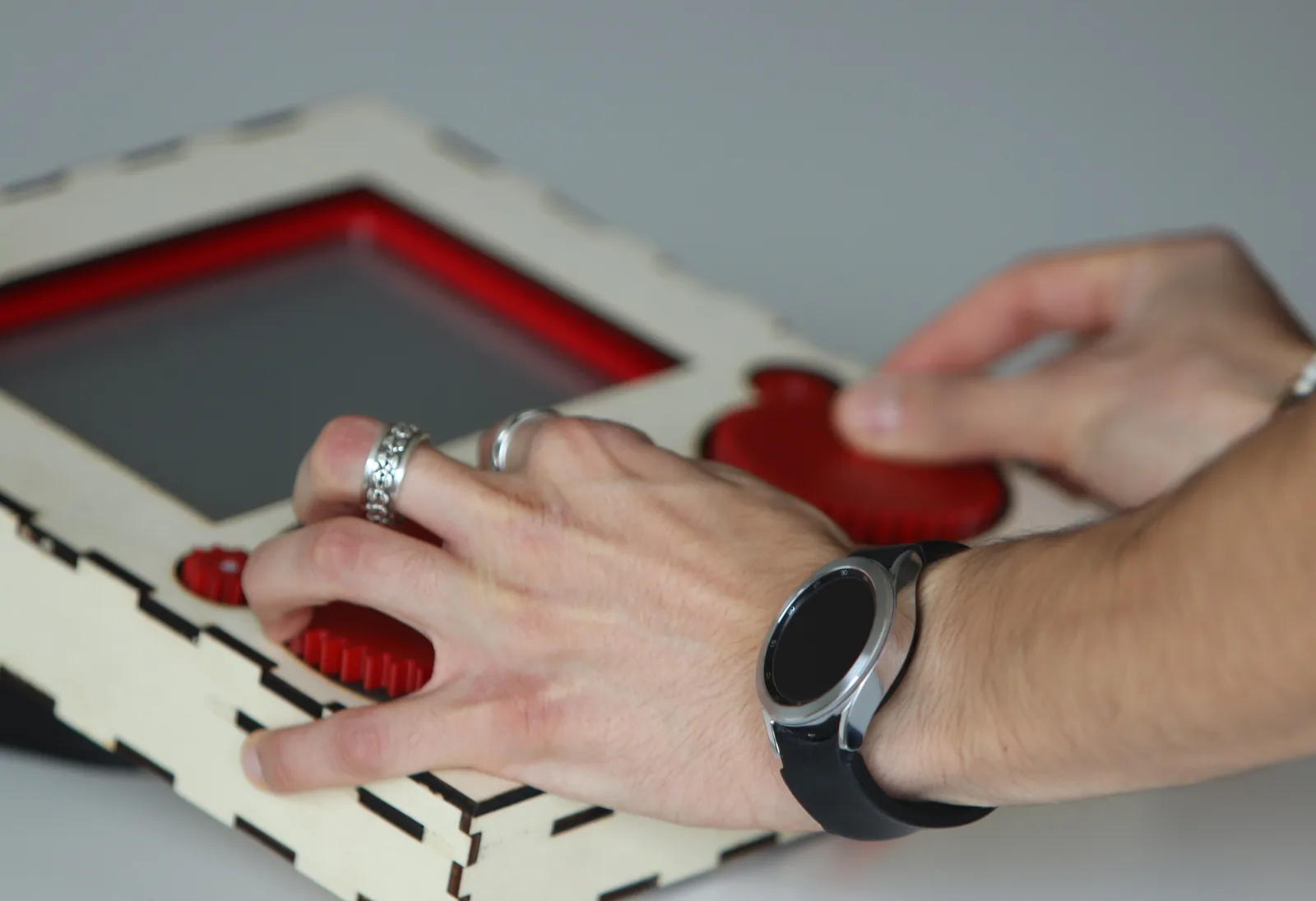
The brief asked for a device that could communicate with another device. Research into sand tables led to the idea of giving the drawing a familiar manual control. Inspired by the Etch A Sketch, two dials map to separate horizontal and vertical movement. Potentiometers read their positions, turning a recognisable physical gesture into input for the table.
Turn a signal into a line
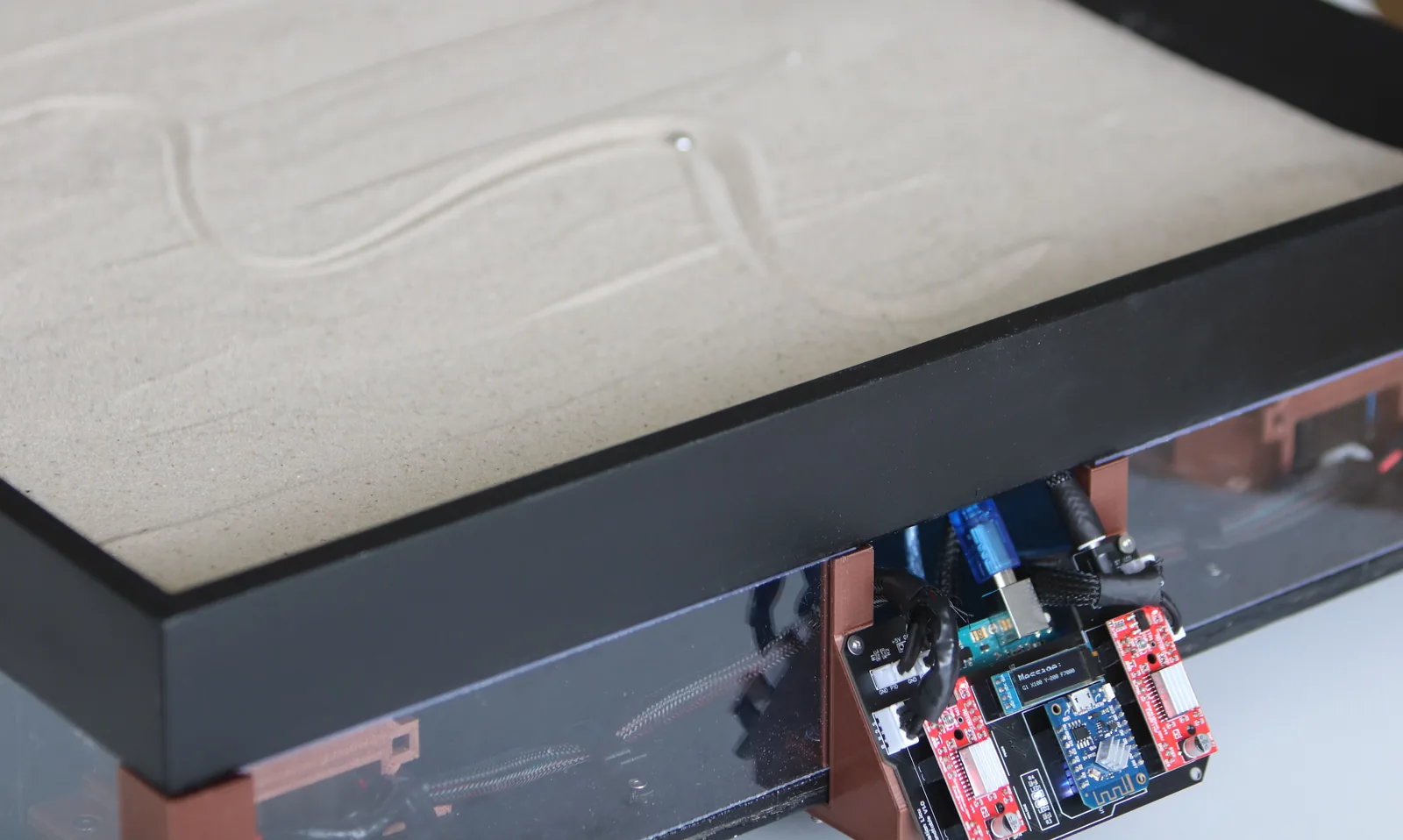
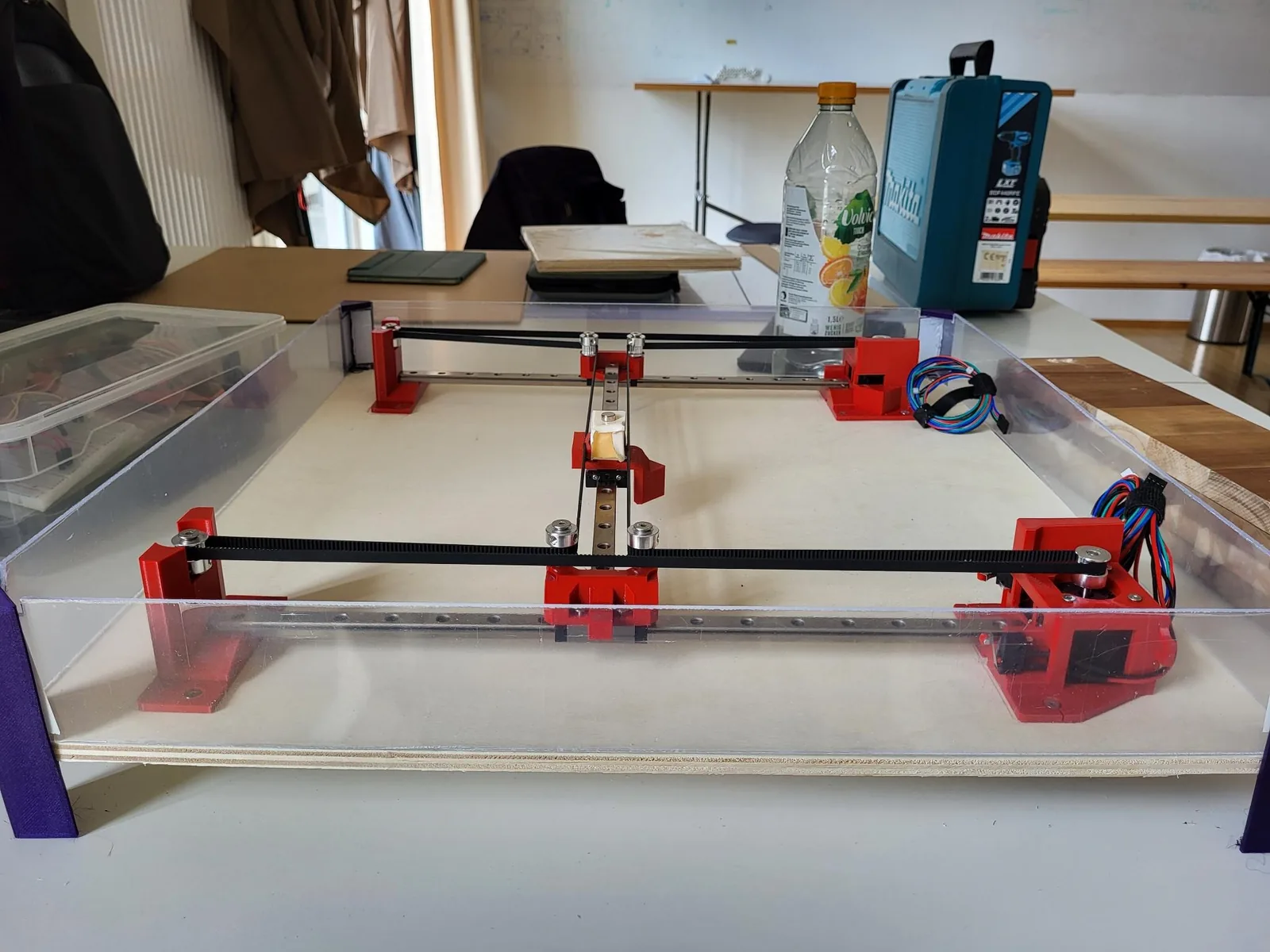
The controller sends its values over MQTT from an ESP32 to a D1 Mini, which passes them to an Arduino running GRBL. A Core-XY mechanism moves the magnet beneath the sand. The ball follows above it, making the system’s response visible as a continuous trace. Early tests and adjustments brought the motor control and physical mechanism together into a running prototype.
Give the electronics a structure
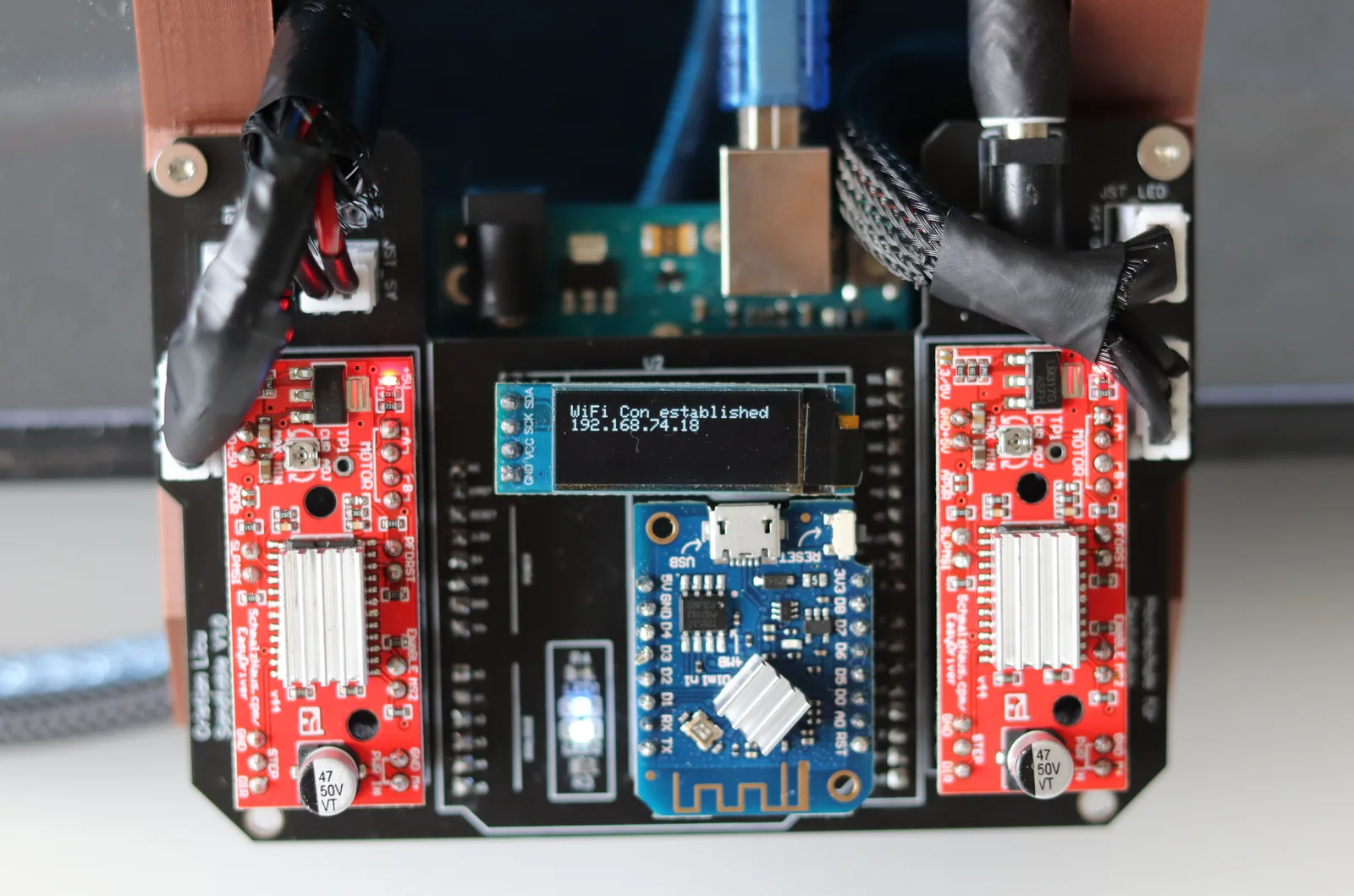
As the prototype developed, loose wiring became another design problem. A custom circuit board gave the components defined positions and reduced the wiring between them. Pin headers allowed modules to remain removable instead of being soldered permanently in place. The board made the assembly easier to understand and continue working on, bringing the same attention to the system behind the interaction as to the controller itself.
What I take from it
A simple interaction can connect many technical steps. Sandtable makes that connection tangible: turning a dial becomes a wireless message, a mechanical movement and finally a line in sand.
The people behind it
Team
Stefan Cristian Licu · Jakob Finkenzeller
Supervisors
Michael Schuster · Benjamin Thomsen